PPTX
Prescribing for the NP 101
Module 1: Prescribing, Safety, Pharmacokinetics & Professional Practice
Original source file is included in this package; the embedded viewer and full extracted text are available below.
Slide Text Extract
Improved reading view: slide text is enlarged, spaced out, and placed in expandable study cards. Use Expand all to read continuously, or search the whole textbook from the search box.
Images embedded in the deck are shown after the slide text. Open the original PPTX for exact slide layout.
Slide 1
Safe Prescribing
Slide 2
Prescribing as an NP
On May 13th, 2014 the Minnesota Governor signed bill SF511 into law. This bill allowed for full practice authority (FPA) for APRNs in Minnesota and was implemented on January 1, 2015.
APRNs must have a separate APRN license to practice.
Drug Enforcement Agency (DEA) number is required to prescribe controlled substances.
CNPs and CNSs beginning practice after July 1, 2014, must practice for at least 2,080 hours within the context of a collaborative management setting in a hospital or integrated clinical setting where APRNs and physicians work together. A written prescribing agreement is not required.
APRNs must have a separate APRN license to practice.
Drug Enforcement Agency (DEA) number is required to prescribe controlled substances.
CNPs and CNSs beginning practice after July 1, 2014, must practice for at least 2,080 hours within the context of a collaborative management setting in a hospital or integrated clinical setting where APRNs and physicians work together. A written prescribing agreement is not required.
Slide 3
BON Regulations
How does an advanced practice registered nurse identify authority to practice?
Jane Doe APRN, CNS
Jane Doe APRN, CNP
Jane Doe APRN, CNM
Jane Doe APRN,CRNA
Educational degrees may be added.
Suggestions for adding other credentials:
Jane Doe DNP, APRN, CNP, CCRN
Jane Doe APRN, CNS
Jane Doe APRN, CNP
Jane Doe APRN, CNM
Jane Doe APRN,CRNA
Educational degrees may be added.
Suggestions for adding other credentials:
Jane Doe DNP, APRN, CNP, CCRN
Slide 4
NPI and prescribing
An NPI (National Provider Identifier) for prescribers is a unique 10-digit number assigned to healthcare providers, including doctors, which is used to identify them for billing purposes in accordance with HIPAA regulations; essentially, it's a standardized way to identify a prescriber when submitting medical claims to insurance companies.
Key points about NPIs for prescribers:
Function: It acts as a standard identifier for all healthcare providers, ensuring accurate tracking and billing when submitting claims to health plans.
Who issues it: The Centers for Medicare and Medicaid Services (CMS) manages the NPI system.
Requirement: All healthcare providers who are considered "covered entities" under HIPAA must obtain an NPI.
Usage: When a prescriber writes a prescription, their NPI is often included on the prescription form to be used by the pharmacy when submitting a claim to the insurance company.
Key points about NPIs for prescribers:
Function: It acts as a standard identifier for all healthcare providers, ensuring accurate tracking and billing when submitting claims to health plans.
Who issues it: The Centers for Medicare and Medicaid Services (CMS) manages the NPI system.
Requirement: All healthcare providers who are considered "covered entities" under HIPAA must obtain an NPI.
Usage: When a prescriber writes a prescription, their NPI is often included on the prescription form to be used by the pharmacy when submitting a claim to the insurance company.
Slide 5
Controlled Substances
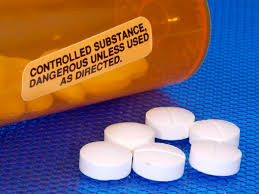
Drugs with abuse potential - RX MUST include a DEA number
Schedule I: Some drugs "chemicals" may not be available by any legal means
Schedule II/IIN: drugs require a "hard copy" RX form OR a special controlled substance transmission protocol through an electronic health record.
Schedule III/IIN, IV, V: regular prescription
Schedule I: Some drugs "chemicals" may not be available by any legal means
Schedule II/IIN: drugs require a "hard copy" RX form OR a special controlled substance transmission protocol through an electronic health record.
Schedule III/IIN, IV, V: regular prescription
Slide 6
What about refills?
Schedule II: No authorized refills are allowed. A new prescription must be written each time.
Schedule III or IV: Prescriptions can be refilled up to five times within a six-month period.
Schedule V: Prescriptions can be refilled as authorized by the prescriber.
Opiate or narcotic pain relievers: Prescriptions for these medications cannot be initially dispensed more than 30 days after the prescription was issued. Subsequent refills cannot be dispensed more than 30 days after the previous refill.
Blue Cross and Blue Shield of Minnesota: There is an 85% refill allowance for controlled substances and stimulants. This means that you must use 85% of your supply before you can refill.
Prescription drug orders: Prescription drug orders cannot be filled more than 12 months after the date it was issued.
Schedule III or IV: Prescriptions can be refilled up to five times within a six-month period.
Schedule V: Prescriptions can be refilled as authorized by the prescriber.
Opiate or narcotic pain relievers: Prescriptions for these medications cannot be initially dispensed more than 30 days after the prescription was issued. Subsequent refills cannot be dispensed more than 30 days after the previous refill.
Blue Cross and Blue Shield of Minnesota: There is an 85% refill allowance for controlled substances and stimulants. This means that you must use 85% of your supply before you can refill.
Prescription drug orders: Prescription drug orders cannot be filled more than 12 months after the date it was issued.
Slide 7
DEA Prescriber Requirements
DEA license holders must complete at least eight hours of training on treating opioid or other substance use disorders. This training is required upon initial registration or renewal.
Slide 8
DEA Certificate
Slide 9
Opioid RX Monitoring
Monitoring use and potential misuse
https://minnesota.pmpaware.net/login
https://minnesota.pmpaware.net/login
Slide 10
Safe Prescribing:
An Eight-Step Approach (WHO & Pollcok, et al.)
Evaluate and Clearly Define the Patient's Problem
Specify the therapeutic objective
Select the appropriate drug therapy
Initiate therapy with appropriate details and consider nonpharmacologic therapies
Given information, instructions, and warning
Evaluate therapy regularly
Consider drug cost when prescribing
Use computers and other tools to reduce prescribing errors
World Health Organization, Guide to Good Prescribing. Available at: https://apps.who.int/medicinedocs/pdf/whozip23e/whozip23e.pdf
Evaluate and Clearly Define the Patient's Problem
Specify the therapeutic objective
Select the appropriate drug therapy
Initiate therapy with appropriate details and consider nonpharmacologic therapies
Given information, instructions, and warning
Evaluate therapy regularly
Consider drug cost when prescribing
Use computers and other tools to reduce prescribing errors
World Health Organization, Guide to Good Prescribing. Available at: https://apps.who.int/medicinedocs/pdf/whozip23e/whozip23e.pdf
Slide 11
Safely Writing the Prescription
Focus your attention on the prescription
One medication on one prescription
Your name should be on the pad
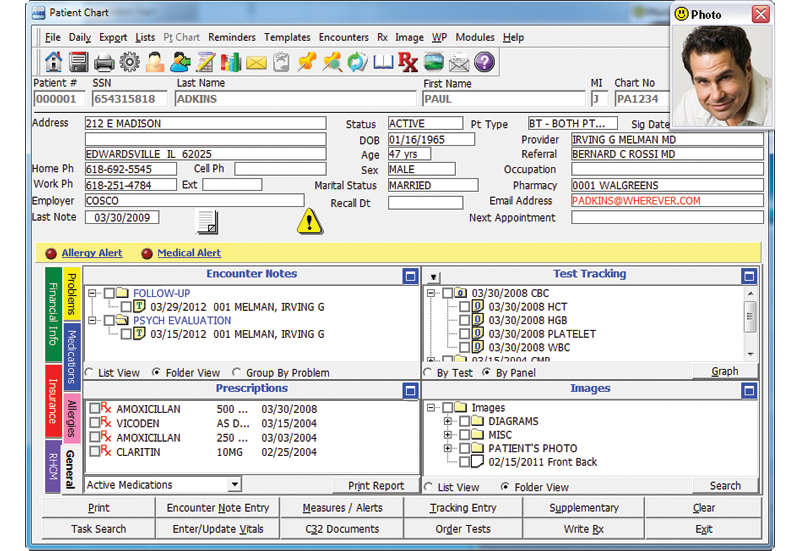
Careful use of electronic prescribing
One medication on one prescription
Your name should be on the pad
Careful use of electronic prescribing
Slide 12
Elements of a Prescription
For a pharmacist to dispense a controlled substance, the prescription must include specific information to be considered valid:
Date of issue
Patient's name and address
Patient's date of birth
Clinician name, address, DEA number
Drug name
Drug strength
Dosage form
Quantity prescribed
Directions for use
Number of refills
Signature of prescriber
Date of issue
Patient's name and address
Patient's date of birth
Clinician name, address, DEA number
Drug name
Drug strength
Dosage form
Quantity prescribed
Directions for use
Number of refills
Signature of prescriber
Slide 13
The Signa
The signa or "Sig" is copied by the pharmacist onto the label of the package
Includes how much of the drug is to be taken, how often, and any specific instructions and warning
Write in lay language
Provide clear and specific directions
Avoid "use as directed" or "as before"
Specify the duration in # of tablets, pills, etc.
Includes how much of the drug is to be taken, how often, and any specific instructions and warning
Write in lay language
Provide clear and specific directions
Avoid "use as directed" or "as before"
Specify the duration in # of tablets, pills, etc.
Slide 14
Safely Writing the Prescription
Include additional instructions as needed
"Avoid sunlight"
"Take with a full meal"
"Do not take with alcohol"
Report "near misses" for use as error as opportunity for improvement
Use the Beers Criteria
Potentially inappropriate medications (PIMs) in older adults
"Avoid sunlight"
"Take with a full meal"
"Do not take with alcohol"
Report "near misses" for use as error as opportunity for improvement
Use the Beers Criteria
Potentially inappropriate medications (PIMs) in older adults
Slide 15
Tips for success:
Use the generic when the brand name is not necessary
In MN you must specify "dispense as written" for the brand name to be dispensed
Avoid abbreviations unless approved by your organization. Help to avoid misunderstanding.
Try to avoid decimals
Levothyroxine 50 micrograms instead of 0.05 milligrams or 50 ug
Use leading zeros when the decimal expression is less than one
Avoid using trailing zeros
In controlled drugs
Write the strength and total amount in words
Instructions for use must be clear and the maximum dose specified
In MN you must specify "dispense as written" for the brand name to be dispensed
Avoid abbreviations unless approved by your organization. Help to avoid misunderstanding.
Try to avoid decimals
Levothyroxine 50 micrograms instead of 0.05 milligrams or 50 ug
Use leading zeros when the decimal expression is less than one
Avoid using trailing zeros
In controlled drugs
Write the strength and total amount in words
Instructions for use must be clear and the maximum dose specified
Slide 16
JCAHCO's "Do not use" abbreviation List
Slide 17
Electronic Prescribing
Full electronic prescribing history
Improved legibility and completeness of prescriptions
Improved hospital business process
Point of care electronic decision support tools
Comprehensive audit trail of prescribing decisions made
Reduced medication errors
This IS the most common form of prescribing at this time.
Improved legibility and completeness of prescriptions
Improved hospital business process
Point of care electronic decision support tools
Comprehensive audit trail of prescribing decisions made
Reduced medication errors
This IS the most common form of prescribing at this time.
Slide 18
Communicate Before you Medicate
Tell the patient the name of the drug and what it is for
Tell your patient exactly how to use the medication
Warn them of possible problems or side-effects
Tell them what to do if they miss a dose
Cost (Source?)
Pharmacy $4 lists (Target, Walmart, Costco, etc.)
Storage
Review RX for possible error
Tell your patient exactly how to use the medication
Warn them of possible problems or side-effects
Tell them what to do if they miss a dose
Cost (Source?)
Pharmacy $4 lists (Target, Walmart, Costco, etc.)
Storage
Review RX for possible error
Slide 19
Electronic tools
Epocrates
Lexicomp
Medscape
Dynamed
UpToDate
Lexicomp
Medscape
Dynamed
UpToDate
Slide 20
Let's Practice
You are a FNP practicing at metro State Family Practice Clinic
700 E. 7th St. St. Paul, MN 55106 #651-793-1300
Write an Rx for Patient #1
Oliver Cutie, DOB 5/9/2014
1 E. 1st ST. Hometown, MN 55555
19-month old boy with otitis media affecting his left ear. You are going to write him a prescription for amoxicillin 80-90 mg/kg/day divided every 12-hours a day for 10 days. NKDA.
Patient weight: 27.5 lbs
Amoxicillin formulation 400mg/5 mL
Write an RX for Patient #2
Ryan Man, DOB 12/19/1979
2 W. 1st St. Hometown, MN 55555
Fractured left humerus. You are going to write him a prescription for Norco 5-325 mg to last him until he returns for his follow-up appointment in one week.
NKDA
700 E. 7th St. St. Paul, MN 55106 #651-793-1300
Write an Rx for Patient #1
Oliver Cutie, DOB 5/9/2014
1 E. 1st ST. Hometown, MN 55555
19-month old boy with otitis media affecting his left ear. You are going to write him a prescription for amoxicillin 80-90 mg/kg/day divided every 12-hours a day for 10 days. NKDA.
Patient weight: 27.5 lbs
Amoxicillin formulation 400mg/5 mL
Write an RX for Patient #2
Ryan Man, DOB 12/19/1979
2 W. 1st St. Hometown, MN 55555
Fractured left humerus. You are going to write him a prescription for Norco 5-325 mg to last him until he returns for his follow-up appointment in one week.
NKDA
Slide 21
" I will prescribe regimens for the good of my patients, according to my ability and my judgment, and never do harm to anyone"
Hippocratic Oath from the 4th Century BC
Extracted Images / Illustrations